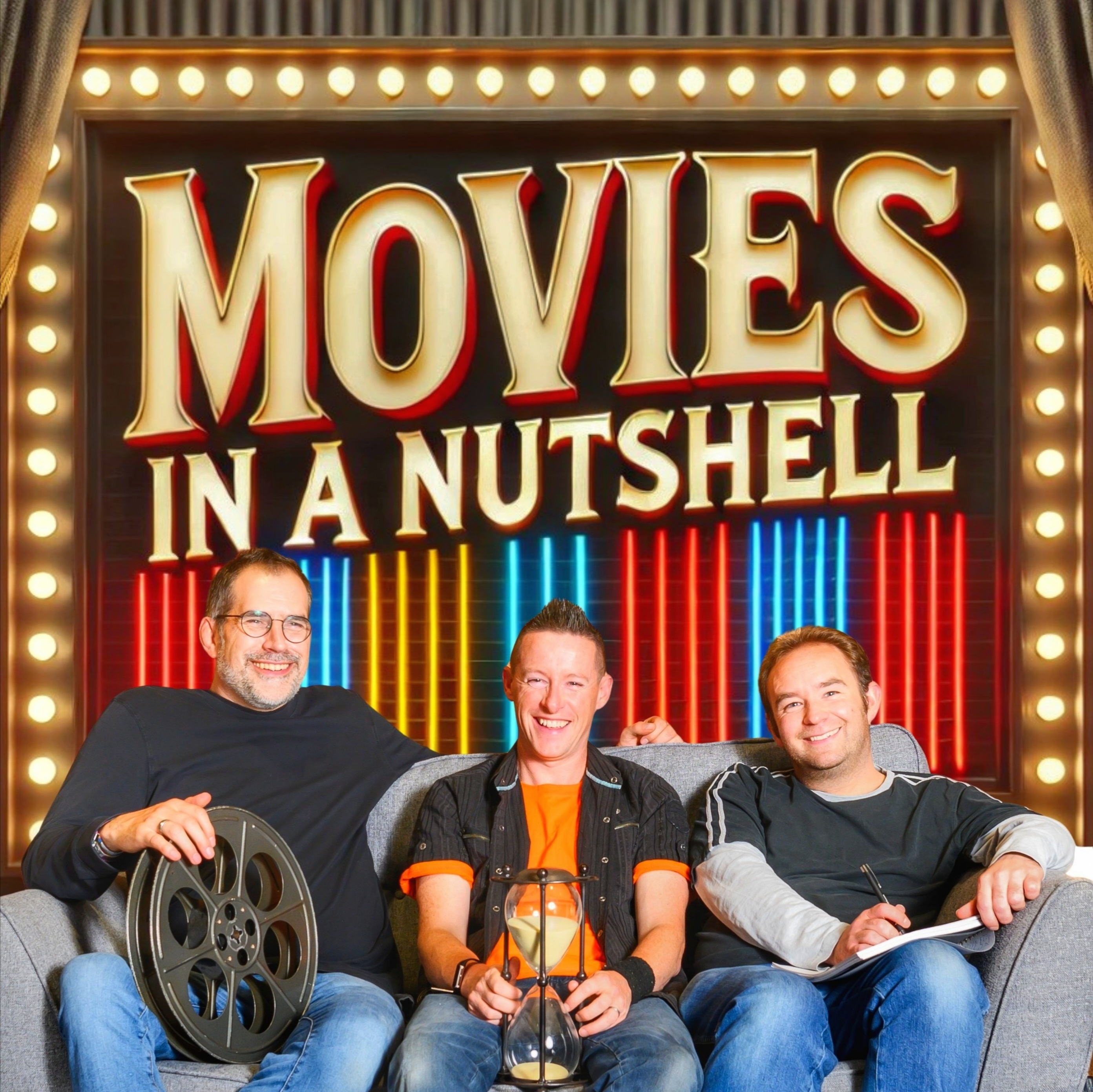
Man On Fire(2004) -A Story of Revenge or Redemption?
Listener Choice, chosen by Alistair Scott. This week, Marc, Darren and Paul crack open Man on Fire, the intense thriller that blends action, emotion and one man's search for purpose in a world filled with violence and corruption.
PART 1 – The Nutshell – If you haven’t seen it
A spoiler-free breakdown designed to help you decide if this action thriller is your kind of film and worth your time.
The lads discuss what makes Man on Fire more than a typical revenge movie, why Denzel Washington's performance remains so memorable and whether this emotionally charged thriller still packs a punch more than twenty years later.
By the end of Part 1, you will have made a decision!
PART 2 – The Unboxing – If you’ve seen it
What Did You Miss?
The things you missed, the details you didn't notice, and the hidden layers behind the film.
The lads unpack the themes, symbolism and character journeys woven throughout the movie, explore the film's darker ideas around guilt, faith and redemption, and discuss the creative choices that make Man on Fire stand out from other action thrillers.
Paul’s Facts of the Day
Behind-the-scenes insights including:
- How the film came to be made
- The real-world events that influenced the story
- Surprising casting stories and alternate possibilities
- Production challenges and filming secrets
- Fascinating facts from behind the scenes
Hate It or Rate It?
Marc, Darren & Paul submit their scores and Man on Fire takes its place in the Listener League and the Legend League.
PART 3 – Listener Lounge – All about you!
The Lobby
Your emails, questions, comments and stories.
Question of the Week
This week's question comes from one of you — our listeners.
Got a great movie question? Send it in and you might hear it featured on the show!
Next Week's Movie
The big reveal of next week's movie!
Listen Now
League Tables:
The Legend League
Every movie we've featured and rated on the podcast.
The Listener League
See how we rated the movies chosen by our listeners.
Join the Conversation
Voice Message:
Email: hello@moviesinanutshell.com
Socials:
Website:
https://www.moviesinanutshell.com
Instagram:
https://www.instagram.com/moviesinanut
Facebook:
https://www.facebook.com/moviesinanut
Your Hosts
Marc Farquhar
Instagram:
https://www.instagram.com/marcfarquhar
Facebook:
https://www.facebook.com/themarcfarquhar
Darren Horne
LinkedIn:
https://www.linkedin.com/in/thedarrenhorne
Paul Day
Instagram:
https://www.instagram.com/pauldaylive23
Music & Sound Effects
Main Theme
TV Show Intro Logo
https://pixabay.com/sound-effects/musical-tv-show-intro-logo-185797/
Music Bed
Protofunk
Attribution Code:
"Protofunk" Kevin MacLeod (incompetech.com)
Cinema Projector
Kakaist
https://pixabay.com/sound-effects/technology-cinema-projector-314492/
Swoosh:
Trading_Nation
https://pixabay.com/sound-effects/film-special-effects-transition-fleeting-121419/
Licensed under Creative Commons: By Attribution 4.0 License.
Transcript
Does that make sense?
Speaker B:No, absolutely not.
Speaker B:What are you talking about?
Speaker C:I guess he was still Tarantino in the video store, but yeah, I think.
Speaker A:At any stage of his life he's got a very punchable face.
Speaker B:Hello and welcome to Movies in a Nutshell with me, Marc Farquhar, myself, Darren.
Speaker C:Horn and I, Paul Day.
Speaker B:Here's why you should tune in every week.
Speaker A:We help you make better movie choices on films you haven't seen with quick spoiler free breakdowns to help you decide if they're your kind of movie.
Speaker C:And we help you get more from the movies you have seen with things you missed and details you probably didn't know us.
Speaker B:Plus there's movie facts, trivia and behind the scenes stories.
Speaker C:There's also your chance to choose the movie.
Speaker B:So grab some popcorn and let's crack open this week's movie.
Speaker B:Right.
Speaker B:Gentlemen, man on Fire.
Speaker B: oice chosen by Alistair Scott: Speaker B:So we're in the nutshell where we will break the movie down.
Speaker B:Spoiler free to help you decide if man on Fire.
Speaker B:Man on Fire is your kind of movie and if it's worth your time.
Speaker B:So let's zoom out.
Speaker B:Surface level.
Speaker B:What do we say about this movie to describe to someone who's maybe not seen it?
Speaker C:Well, a washed up X agent.
Speaker C:I haven't thought this out.
Speaker C:I'm thinking of it as I'm doing it.
Speaker C:Needs a job.
Speaker C:Ends up in Mexico City and takes on a bodyguard post for this family to protect their daughter because there's lots of kidnapping kidnappings going on.
Speaker A:It's basically the.
Speaker A:It's the bodyguard with a young girl instead of Whitney Houston.
Speaker C:That's a quicker way of saying what I was trying to say.
Speaker C:There you go.
Speaker C:That's a nutshell.
Speaker C:Yeah, it's the bodyguard with no singing.
Speaker B:So I made some notes.
Speaker B:So this is an action thriller about a burned out former bodyguard who takes a job protecting the daughter of a wealthy family in Mexico.
Speaker B:At first he wants nothing to do with the job.
Speaker B:He's cynical, he's isolated and he's carrying more emotional baggage than hand luggage at a budget airline.
Speaker B:But over time, he an unexpected friendship begins to develop.
Speaker B:Then everything changes.
Speaker B:What follows is a story about loss, revenge, redemption, and just how far someone will go for a person they care about.
Speaker C:Yep, redemption arc big time.
Speaker B:And then what else we got in here?
Speaker B:We've got kidnappings, you've got corruption, you've got conspiracies, you've got explosions, you've got an angry Denzel Washington.
Speaker C:He's on fire.
Speaker B:This is an intense, emotional, violent thriller.
Speaker B:Surprisingly heartfelt action movie.
Speaker B:Yeah.
Speaker B:It's a thriller as well.
Speaker B:Yeah.
Speaker C:Although I'd be careful.
Speaker C:I was thinking this as I was watching it for the nutshell part.
Speaker C:Be careful calling it an action film because there is action in it.
Speaker C:If you go in expecting, like a John Wicked action film, it's not going to be quite as intense as that.
Speaker C:It's more of a thriller.
Speaker C:There's a lot of build, there's a lot of slow burn.
Speaker C:There's a lot of characterization.
Speaker A:Yeah.
Speaker A:But the action scenes, it's directed by Tony Scott, so.
Speaker C:Oh, yeah.
Speaker C:It's.
Speaker A:Even when it's not action, it's directed like it's actually.
Speaker A:Oh, yeah, yeah.
Speaker C:It's very frenetic and kind of officially,.
Speaker B:At 2 hours 26.
Speaker A:Yeah.
Speaker B:It's an action thriller.
Speaker C:Oh.
Speaker C:Tweets down as action.
Speaker B:That's what it says.
Speaker C:Okay.
Speaker C:I just want the.
Speaker C:There is action in enough action in.
Speaker B:It called an action movie, I think.
Speaker C:Yeah.
Speaker C:And like Darren says.
Speaker C:Yeah, it's very much a Tony Scott film.
Speaker C:So it's very much in the leagues of Michael Bayes and that kind of thing where the way it's edited and sort of keeps the.
Speaker C:The pace up.
Speaker C:Tony Scott, in case you weren't sure, he's the brother of Ridley Scott and he did things like Top Gun, Days of Thunder, Enemy of the State, which is one of our previous podcasts, and lots of other different stuff.
Speaker A:Domino.
Speaker C:Domino.
Speaker C:That was Kieran.
Speaker A:Yep.
Speaker A:He's also the brother of Ridley Scott and they had an advertising company together.
Speaker A:They did a really famous advert, which was the Hovis bread advert.
Speaker C:Yeah.
Speaker A:The boy is pushing a bike up a hill.
Speaker A:Deliver the bread.
Speaker C:That was Ridley Scott's direct thing, I think.
Speaker C:Direct debut, maybe.
Speaker B:Was it?
Speaker A:Was it?
Speaker A:I don't know.
Speaker C:Oh, famous one.
Speaker C:Anyway.
Speaker B:Yeah.
Speaker A:So, yeah, very talented family, sadly.
Speaker B:Yes, it's his.
Speaker A:Interesting, because on the last movie on Shrek, you were talking about how Chris Farley died during production.
Speaker A:Tony Scott sadly passed away.
Speaker A:Died from suicide.
Speaker D:Yeah.
Speaker C:Which was a surprising one, really, because I think they would try to get him to do the.
Speaker C:The Top Gun sequel.
Speaker C:I think he.
Speaker C:I think he was involved in the production process of working on that with Tom Cruise.
Speaker C:But then obviously he wasn't around to do it by the time it was.
Speaker A:It's really tough because we've talked about kind of the men's mental health crisis quite a bit on the show, and he was in his 60s and from the outside you can think, wow, You're Tony Scott.
Speaker A:Like you've got a great back catalog and you've got opportunities to direct more stuff.
Speaker A:And I couldn't find any reason.
Speaker A:Not that you need a reason.
Speaker A:The depression is the reason.
Speaker A:Right.
Speaker A:But it doesn't feel like there was a.
Speaker A:Something we could look at from the outside and be like, oh, yeah, that was the reason.
Speaker C:It just seemed a very sudden one, didn't it?
Speaker A:There's rumors that maybe had cancer and didn't want to go through that, but I don't know.
Speaker B:2012, He died.
Speaker A:Yeah, I remember happening.
Speaker A:It was just like he was a.
Speaker B:Geordie like me from Newcastle.
Speaker C:That's right, yeah.
Speaker C:So this was one of his big films, I think, or one of his biggest, especially in that time period.
Speaker C:What year?
Speaker C: They said: Speaker B:Yeah.
Speaker C: So like of the: Speaker A:Isn't there a TV show now of it, man on Fire?
Speaker C:I did see something in person.
Speaker B:I don't think it's.
Speaker B:I don't know if it's directly linked to this.
Speaker C:Yeah, sure, maybe.
Speaker B:This definitely does have any of the state vibes.
Speaker B:And so a lot of the titles, the way the.
Speaker B:The font and the sound it makes when they come across.
Speaker B:Very technological.
Speaker C:Yeah.
Speaker B:And some of the aerial shots when they like.
Speaker B:Obviously it's obviously no drones back then, but obviously do a plane movie.
Speaker B:But they speed it up.
Speaker B:Lots of very zoomed out shots.
Speaker C:It's very up with Michael Bay in the way it's edited as well.
Speaker C:There's lots of kind of creative shots.
Speaker B:Yeah.
Speaker B:And flickering and moving, swirling cameras around.
Speaker B:Cameras around characters.
Speaker C:Which is a very Tony Scott thing to do, isn't it?
Speaker A:Yeah, it's like hyper realistic and subjective.
Speaker A:So there's a lot of things like slow motion particularly.
Speaker A:And we've talked about this before, I think, because I like it when movies do that.
Speaker A:I like it when movies show the film as though we're seeing the character's memory of what happened.
Speaker A:So if you're in a heightened state, everything does slow down.
Speaker B:So your memory, you suddenly start getting flashbacks to something.
Speaker C:And there's quite a lot of that in this, in there.
Speaker C:Lots of flashbacking and forths.
Speaker A:Yeah, I love all that kind of stuff.
Speaker A:So.
Speaker A:But it's also similar to Equalizer, which is another Denzel Washington.
Speaker B:My movie is Taken meets Equalizer.
Speaker A:Yeah, good ones.
Speaker B:That's cool.
Speaker A:There's also a film that I really like, at least I did the last three or four times I've watched that called Proof of Life.
Speaker A:With Meg Ryan and I haven't seen it.
Speaker C:I've heard of it.
Speaker C:I haven't seen it.
Speaker A:You huge Meg Ryan fan?
Speaker C:I love Meg Ryan.
Speaker C:But now I haven't seen that one.
Speaker C:It's one that slipped me by.
Speaker C:The only other one I wrote down is it's kind of got a bit of Leon maybe in the mix.
Speaker C:Maybe a bit of Ransom.
Speaker B:Ransom, yeah.
Speaker B:Now that went down.
Speaker A:Maybe something with a cute relationship with a kid.
Speaker B:Yeah, Leon definitely for that.
Speaker C:And almost the.
Speaker A:Or Indiana Jones.
Speaker A:Temple of Doom.
Speaker B:Yes.
Speaker B:Yes.
Speaker C:And the second Jack Reacher film's got a bit of that as well.
Speaker C:Never Go Back, I think it's called.
Speaker C:Yeah, there was a second Jet Reacher film with Tom.
Speaker C:Tom Cruise did to Jet Reacher films.
Speaker A:Yeah.
Speaker A:I don't remember the kid.
Speaker C:And the second one was sort of.
Speaker C:I mean they might have been a teen.
Speaker C:I don't think they were a kid.
Speaker C:But there was a bit of sort of the relationship thing going on there.
Speaker C:From a rightly.
Speaker B:What kind of watches is Darren?
Speaker A:I think this is a Friday night beer movie.
Speaker A:I think this is could be a date movie.
Speaker A:It could be a relationship viewing because Denzel's a sympathetic character and the kid is just cute and.
Speaker A:But I also think you could just watch it with a group of friends and just drink some beers, eat pizza.
Speaker A:You don't have to pay attention to everything.
Speaker A:It's not a complex thought like plot.
Speaker A:You don't have to be solving things or putting things together.
Speaker A:It's being pretty formulaic.
Speaker C:It's more the stylistic nature of the film, isn't it that draws you in rather than the complex plot type of thing.
Speaker A:I feel like if you were in a club in the 90s or at least in 90s movies, it's the type of thing you'd have playing on screenshots in the club.
Speaker B:It's a visual movie which you could watch without the sound.
Speaker C:It almost feels like a 90s movie.
Speaker B:In the way any of the state.
Speaker B:Yeah.
Speaker C: I was surprised when you said: Speaker B:Yeah.
Speaker C:Because when was enemy estate was like 98.
Speaker B:98.
Speaker C:So I thought it had been just after that maybe.
Speaker B:Yeah, yeah.
Speaker B: Like it could have been: Speaker B:Okay, that takes us on to part two, the unboxing.
Speaker B:So spoiler territory ahead.
Speaker B:If you haven't seen man on Fire and you've decided you do want to go watch it, we recommend that you go do so now because from this point forward there will be spoilers.
Speaker B:So in part two, the unboxing we have.
Speaker B:What did you miss?
Speaker B:Where we Reveal things you may have missed even if you've seen the movie many times.
Speaker B:Paul has his facts of the day and we round off with Hate it or Rate it, where we each give a brief opinion score out of 10 and we see where it lands on our legendary unlistener league this time as well.
Speaker B:Okay, what did you miss?
Speaker B:I'm gonna go to you, Mr. Horn.
Speaker A:I was surprised at the level of religion in this movie and the base is in Mexico.
Speaker B:It's surprising.
Speaker A:But even with Denzel Washington's character and because I often think about him as a person because he's quite a well known.
Speaker A:We know quite a bit about him.
Speaker A:Or he's got a very distinct Persona, I think.
Speaker A:And he is.
Speaker A:Seems to be very religious slash spiritual.
Speaker A:Because there's one of my movies I really like.
Speaker A:It's called the Book of Eli and that's Denzel Washington.
Speaker A:And that.
Speaker A:That felt like a deviation from the type of role he would normally do.
Speaker A:But it's also a commentary on faith and religion and redemption and all that kind of stuff.
Speaker A:So it doesn't surprise me too much that he did it.
Speaker A:But again, watching it again for the show, it is freaking dark.
Speaker A:Like I had no memory that he puts a gun to his head and tries to kill himself.
Speaker A:And if I mention that, rock bottom.
Speaker B:Yeah, this is a proper 18 rating movie.
Speaker B:Like I don't know if we've actually had many 18s on this podcast.
Speaker C:Not masses.
Speaker C:No.
Speaker B:Well, you could maybe especially older ones you like.
Speaker B:You realize why it's an 18.
Speaker B:You're like, Jesus.
Speaker C:Heavy hit.
Speaker B:This is.
Speaker B:This is definitely one of those.
Speaker A:So you've got a guy who's ex military in some way and has done some heinous stuff.
Speaker B:Yeah, he's carrying a lot of baggage.
Speaker A:Yep.
Speaker A:And then now he's religious.
Speaker A:So you don't know if it's the.
Speaker A:I've done heinous stuff.
Speaker A:So I'm going to now become religious.
Speaker A:So I get forgiveness, which I always get.
Speaker B:I was trying to be on a path of redemption kind of thing.
Speaker A:Yeah, yeah.
Speaker A:Or he was always religious and he did what he thought was best for his country or for the moment or whatever.
Speaker A:And then it's taken a toll on him.
Speaker A:So he's looking for redemption and he tries to kill himself.
Speaker A:And then the movie is strongly suggesting that God exists because the gun doesn't fire.
Speaker C:That's right.
Speaker C:It's like the magic bullet that he then saves, doesn't he, for later on in the film.
Speaker A:Exactly.
Speaker A:Where they do the same thing in lethal weapon, the 80s movie.
Speaker A:Like, you know, Riggs is going to kill himself.
Speaker A:He's suicidal.
Speaker A:It's a very similar kind of character in that way, I guess.
Speaker A:Riggs gets saved by Murtagh's family to a certain extent.
Speaker A:Yeah, I can remember.
Speaker A:But yeah, he's.
Speaker A:Whereas Riggs puts the gun to his head, but then doesn't pull it.
Speaker A:This guy pulls it.
Speaker A:He's just like, boom.
Speaker A:And then he calls his friend.
Speaker A:He's like, have you ever seen a bullet get, like, caught in the chamber and not fire?
Speaker A:He said, yeah, yeah, it happens.
Speaker A:It's like, not that often.
Speaker A:He's like, what have you been shooting at?
Speaker A:My own head myself.
Speaker A:Which is dark as hell.
Speaker A:This is.
Speaker C:It's all done.
Speaker C:Like, he's in the rain and he's on the phone, isn't he?
Speaker C:And the kids looking out.
Speaker B:He's not the hero, really.
Speaker B:He doesn't know he's the hero.
Speaker B:He doesn't particularly want to be the hero.
Speaker A:I really love that way of looking at movies that these guys don't know they're the hero.
Speaker A:A lot of times the villain doesn't know they're the villain, and most of the time, the characters don't know what genre movie they're in.
Speaker B:Oh, like Skywalker.
Speaker B:Luke Skywalker.
Speaker B:He has no idea he's going to be what he becomes.
Speaker A:No.
Speaker B:Totally starts off as a fanboy.
Speaker A:It's easier to be sympathetic, particularly if it's horror movies.
Speaker A:And it's like, well, don't go in there.
Speaker A:They don't know they're in a hotel room.
Speaker A:Like, I was in bed the other day and heard a noise downstairs, and I was.
Speaker A:I guess I'm gonna check what that is.
Speaker A:And don't go in there.
Speaker A:That was a TV show.
Speaker A:They'd be like, what's that fool doing?
Speaker A:Yeah, there's vampires out, but they also.
Speaker B:Don't turn any lights on.
Speaker A:Yeah, I don't turn lights on.
Speaker A:I want to be the thing things are scared of.
Speaker A:I walk silently through my.
Speaker A:I. I know the layout of my.
Speaker A:My house more.
Speaker A:I know where the weapons are.
Speaker A:I'll defend it.
Speaker B:I've night vision goggles.
Speaker A:Don't tease me.
Speaker A:You really have.
Speaker B:No.
Speaker B:I thought that's what you were going to say.
Speaker A:I could do with night vision goggles.
Speaker A:It's black.
Speaker A:Where I.
Speaker C:If there's a sponsor out there who has night vision goggles that wants Darren to sponsor them through the podcast, just let us know.
Speaker A:Yeah, yeah, send them to me.
Speaker A:That'd be lush.
Speaker A:His character says to his mentor, Christopher Walken.
Speaker A:Do you think God will forgive us for what we have done?
Speaker A:And then Dakota Fanning's young girl calls him a big, sad bear.
Speaker A:So I find it interesting.
Speaker A:And then.
Speaker A:Then to one way of looking at it is this guy at the beginning of the movie wants to kill himself and does basically do it.
Speaker B:Yeah.
Speaker A:But is saved by God, if you want to read it in that way.
Speaker A:And then by the end of the movie, God has allowed him to die.
Speaker A:It's almost like an opposite final destination.
Speaker C:Yeah.
Speaker C:You can now die.
Speaker C:You've saved the little girl.
Speaker A:Yeah.
Speaker C:Yeah.
Speaker C:And after you go to your death,.
Speaker A:You can die in peace, but.
Speaker A:But also redemption.
Speaker A:Like, how many people have you killed?
Speaker A:What's the scales?
Speaker A:Who here?
Speaker B:But it's like, if he's done something really bad, he's done something really good, but he still dies.
Speaker C:And he does say Christopher Walken at the start somewhere, doesn't he?
Speaker C:Like, will we ever be forgiven for all the crap we've done?
Speaker A:Dude, I just said that.
Speaker C:I know, but when he's discussing it with his mate, it's obviously, Christopher Walken's done been through all that as well, but he's dealing with it on a different path.
Speaker A:He's got a family as well.
Speaker C:Yeah.
Speaker C:And.
Speaker C:But it's funny how he's in the story at the start to kind of set it up and then sort of disappears, and then he sort of pops back up at the end a bit, but he's not in it consistently.
Speaker C:So it's how different people are dealing with that journey of the redemption of.
Speaker A:Absolutely.
Speaker A:And it's like that whole thing, can you, you know, can you stare into the abyss without it staring back?
Speaker A:Or can you deal with monsters without becoming a monster yourself?
Speaker A:And, yeah, there's movies that address that as well, which I find interesting.
Speaker A:Then he gets a gift from the girl.
Speaker A:He gets given St. Jude, which is the patron saint of lost causes.
Speaker A:Can you imagine if someone gave you that gift?
Speaker A:So here, Paul, I've got you.
Speaker C:Oh, do you not want that, Darren?
Speaker C:I was just gonna give you that.
Speaker A:Oh, I see a patient saying of lost causes.
Speaker A:So I'm a lost cause.
Speaker A:Yeah, you kind of are.
Speaker D:Yeah.
Speaker B:No, you won't be with this, though.
Speaker A:Yeah.
Speaker A:Well, now.
Speaker A:Now you're.
Speaker A:Exactly.
Speaker A:Now it becomes like that song.
Speaker A:What's that song?
Speaker A:Where it's like, you're beautiful because you don't know you're beautiful or someone like.
Speaker A:No, you know, it's a part.
Speaker A:It's a boy band song.
Speaker C:Yeah, we don't know those you don't know you're beautiful.
Speaker B:One Direction.
Speaker C:It's One Direction.
Speaker A:Okay.
Speaker A:Yeah, exactly.
Speaker A:We did know it, but now you've just done a song telling her she's beautiful.
Speaker A:So now she knows she's beautiful, which means she's not beautiful.
Speaker A:Does that make sense?
Speaker B:No, absolutely not.
Speaker C:I'm just going to put this patron saint of lost causes back in my bag, Darren, now.
Speaker A:Exactly.
Speaker A:Because if you get the patron saint, lost causes and then you.
Speaker A:The saint looks after you, then you're not a lost cause anymore.
Speaker A:So now you've got to give it back.
Speaker C:Yeah.
Speaker C:You don't need that anymore.
Speaker A:Yeah.
Speaker A:I'm not lost cause, so.
Speaker A:Yeah.
Speaker A:And then it's.
Speaker A:It's also touching on alcoholism as a way to deal with that and to numb yourself from.
Speaker A:On the pain.
Speaker B:But also people with PSD and they're like, that's how.
Speaker B:That's a coping mechanism.
Speaker B:Coping mechanism, isn't it?
Speaker C:And it's very much evident of his PTSD through them initial scenes as well, isn't it?
Speaker C:As he's trying to adapt and then he's very blunt with the guy who's hiring.
Speaker C:He's like, why are you this cheap?
Speaker C:Because I drink.
Speaker C:Yeah.
Speaker C:He's like, oh, okay, don't tell my Mrs.
Speaker B:But throughout the film, it's clear he's struggling to cope with just life.
Speaker A:Yeah.
Speaker B:Whether he's employed or not, he's just generally struggling.
Speaker C:The change seems to come in.
Speaker C:I made a note, like, oh, the change came in because he's struggling to connect with her.
Speaker C:He's struggling to fit in.
Speaker C:And then it all became.
Speaker C:When she was just swimming.
Speaker B:Swimming.
Speaker C:Yeah.
Speaker C:And then he becomes like the car.
Speaker B:He started coaching it.
Speaker D:Yeah.
Speaker C:Which made me laugh because obviously there's the film we've reviewed on here.
Speaker C:Check it out.
Speaker C:Remember the Titans where he's the coach in that as well?
Speaker C:It's like Denzel being a coach.
Speaker C:It's just.
Speaker B:He's got it.
Speaker C:He's got it.
Speaker B:So that's.
Speaker B:Freeman is the.
Speaker B:Is the higher power.
Speaker D:Yeah, yeah.
Speaker A:Did that.
Speaker A:Do you find that a little bit jarring?
Speaker A:Like, where did that come from?
Speaker C:Yeah, it seemed to happen quite suddenly, didn't it?
Speaker A:Why is he suddenly a swimming coach?
Speaker B:I think just because he saw that the dad is just non, non present.
Speaker C:And he kind of latched onto it.
Speaker B:He hasn't got kids, so he.
Speaker B:He wouldn't know.
Speaker B:He wouldn't like have any.
Speaker B:Like, if he had a daughter, it would probably become more natural to him.
Speaker B:But because he's.
Speaker B:I think.
Speaker B:I don't know why, because he didn't want.
Speaker B:Initially, he didn't want anything to do with the family or he just wanted to do his job and go home.
Speaker A:Was it clear what his past was?
Speaker A:Did they say it?
Speaker A:And I just.
Speaker C:They don't really say it, I don't think.
Speaker A:Because if he was like a Navy SEAL or something, then they think, okay, well, you would have been trained to,.
Speaker C:Oh, is he CIA or something like that?
Speaker B:Just a burned out former bodyguard.
Speaker B:So I think he's just been a bodyguard his whole life.
Speaker A:Okay.
Speaker A:It would have been nice if there'd been some kind of backstory as to why he felt really comfortable coaching someone in swimming.
Speaker B:Yeah.
Speaker B:Because him and Christopher Walken similar things, but they never really go into it.
Speaker C:No.
Speaker B:What their shared path is, we don't know.
Speaker B:Yeah.
Speaker A:Which you.
Speaker A:You could, you mean you could just be watching or flicking through old photos when he was in that bad state.
Speaker C:Or maybe.
Speaker C:Maybe it's done that way on purpose.
Speaker C:So we don't know what it is to kind of create a bit of tension around.
Speaker B:We know it's bad.
Speaker B:We don't know how bad.
Speaker C:Yeah.
Speaker B:He's supposed to be the bodyguard, but he ends up becoming childcare, obviously.
Speaker B:Pickups and the drop offs and the teaching and just like how help him with homework.
Speaker B:And the dad's just completely.
Speaker B:All he cares about himself is the.
Speaker A:Kid, the biological kid for both of them.
Speaker A:Or was that like it's.
Speaker B:I don't know if that was ever explained.
Speaker B:I assume it's assumed, but I don't think it's explained.
Speaker A:It's assumed that it's.
Speaker B:You would assume it's definitely her kid.
Speaker A:Yeah.
Speaker B:Well, who knows?
Speaker A:I was just curious because I also.
Speaker B:Wouldn't put those two together either.
Speaker B:He seems a bit of a like.
Speaker B:Like someone from the Godfather where the wife doesn't really know what the husband does.
Speaker A:Yeah, totally.
Speaker C:But the kid's learning the languages and things, isn't she?
Speaker C:So you kind of assume that she's grown up in that environment.
Speaker B:They've obviously had to go to Mexico because of him because obviously they weren't there initially.
Speaker A:Oh, my God.
Speaker A:I just had that feeling of dread of having to live somewhere like that and literally having to hire a bodyguard to take your kids to school.
Speaker A:Yeah, that's like, that's.
Speaker C:Well, I think this was based upon.
Speaker C:I think I've got the actual fat layer, but based upon a series of kidnappings that were actually happening in real life.
Speaker A:Yeah.
Speaker D:Yeah.
Speaker C:And that was all based on this.
Speaker C:So, like you say it's not just a movie thing.
Speaker C:It was a proper actual get together.
Speaker A:Like get five kids who travel together with five bodyguards.
Speaker A:Yeah.
Speaker B:School bus.
Speaker A:Yeah.
Speaker A:Get the A team.
Speaker B:Like a team going back to the.
Speaker B:Their relationship.
Speaker B:So Denzel Washington is more of a father in that short time than her dad was in her entire life.
Speaker B:Yeah, her dad is just.
Speaker A:From what I'm seeing.
Speaker A:Absolutely.
Speaker B:And things like the way he's very like.
Speaker B:She's like, I don't want to do piano, I want to do swimming.
Speaker B:And he's like, no, you're doing piano.
Speaker B:Don't.
Speaker B:I didn't like that.
Speaker D:Yeah.
Speaker C:He didn't really take on any of her opinions at that age.
Speaker B:Just let them do what they want.
Speaker A:Yeah, I know, but then I wish I played guitar now or whatever.
Speaker A:There's things I wish.
Speaker B:Yeah, but she was good at it.
Speaker B:She got to a certain level.
Speaker B:And if you still don't enjoy it, you can't force it upon them.
Speaker A:Yeah, but maybe he didn't know that because she was always coming like fourth or third.
Speaker A:So he was, oh, you're not good at swimming.
Speaker A:You could be great at piano.
Speaker B:This movie wouldn't.
Speaker B:The second half wouldn't be as impactful without the first half.
Speaker B:Half.
Speaker A:No, it was really great.
Speaker B:It's a very slow build.
Speaker B:I've made a note of.
Speaker B:I don't think in younger audiences would hack this.
Speaker B:I think there's not enough going on in that first.
Speaker C:That's why I was kind of putting the warning in about it not being constant.
Speaker B:We as older people are used to that.
Speaker A:The backdrop of this story was actually happening.
Speaker A:And I think, you know, there's introduced to Denzel Washington talking to peoples whose family had been through this.
Speaker A:And I think one of the.
Speaker A:Their daughters had both ears cut off because something went wrong.
Speaker B:I like the scene where the police were showing him mug shots of police officers.
Speaker B:And clearly the two guys who were there were there.
Speaker B:And he's like, no, don't recognize it.
Speaker B:Because he's going, I'm sorting this out myself.
Speaker C:They're going, cheers.
Speaker B:No, thanks.
Speaker B:I like that.
Speaker C:But that was the other underlying theme, wasn't it?
Speaker C:Corruption.
Speaker C:The idea of corruption in police forces, which is.
Speaker B:Which is well known in Mexico anyway.
Speaker C:Yeah.
Speaker C:And you've got like the one police guy over there going like, oh, this is terrible.
Speaker C:He's done all this.
Speaker C:But then you've got the other guy.
Speaker C:I can't remember his name.
Speaker C:He was in some of the Daniel Craig Bond films.
Speaker C:But the guy with the mustache and the reporter who obviously know there's the corruption.
Speaker C:And they kind of come in halfway through the film and they're going to Denzel, you know, we believe you.
Speaker C:We know there's corruption.
Speaker C:And then they kind of almost become the little backup squad.
Speaker C:And he has a bit of contact back and forth with the reporter.
Speaker C:I mean, at first he doesn't want it, but then she obviously pushes it on.
Speaker C:But then even by the end of the film, you kind of get that cop.
Speaker C:He takes down the voice, doesn't he?
Speaker C:In like a bit of a sort of cutaway scene to say, look, they got him.
Speaker C:But it was all part of them working together in a bit of a thing.
Speaker C:But, yeah, the corruption stuff, it's quite scary.
Speaker C:Quite scary.
Speaker B:And the guy who's head of Anti.
Speaker B:Anti Kidnapping.
Speaker C:Yeah.
Speaker B:Is basically the main protagonist in all.
Speaker D:Yeah.
Speaker B:There's a great quote.
Speaker B:Death is his art and he's about to paint his master.
Speaker A:I despise that quote.
Speaker B:I knew that.
Speaker B:I knew he would as well.
Speaker B:And I was like, I like that.
Speaker B:Darren will hate that.
Speaker C:It's dark.
Speaker A:One other thing, which I don't think people would have missed, but the swimming thing where she's being trained to not flinch at the starter gun.
Speaker A:Cause that's why she's not.
Speaker A:That's why she's not winning, because she's not going fast enough when there's that really tense kidnapping attempt.
Speaker A:He then fires the gun in the air and that's the thing that triggers her to go to run.
Speaker A:Which I. I think was quite obvious.
Speaker A:But you guys got that, right?
Speaker B:Yeah, yeah.
Speaker B:Like the tr.
Speaker B:That's where the training came in there.
Speaker C:But then, of course, she came back because she was worried about him because he'd been shot.
Speaker C:Because she initially runs, doesn't she?
Speaker A:Were you screaming at the time?
Speaker B:Yeah, I was.
Speaker B:Or just go back in the door where you were just about to walk out that massive.
Speaker B:Just shut the door.
Speaker B:Go.
Speaker B:Yeah, go inside.
Speaker B:Because until that point, it was like.
Speaker B:It was.
Speaker B:There was nothing major happened.
Speaker B:That was the first like, oh, and.
Speaker C:You know it's coming.
Speaker C:You like, you know, you've seen the title of the film, you've seen the poster, and you know the build's coming as to.
Speaker C:Well, what's going to set him off.
Speaker C:Clearly something with his kid.
Speaker A:Gives you a bit of insight into the gun culture in America, doesn't it?
Speaker A:Because I think if we were in an environment where there was that many threats to our kids, I'd be packing.
Speaker A:I'd just.
Speaker B:Won't be there.
Speaker A:Yeah, I would.
Speaker A:I would be Armed like hell.
Speaker A:So, yeah, just.
Speaker B:And the scene towards the end where he basically gives the dad, after he figured out, gives him the dad the gun, it gives him a bullet and there's an end as a gun.
Speaker B:Like, that kind of raises the question, like, could you live with yourself if you were inadvertently or directly responsible for your child's death?
Speaker B:That was.
Speaker B:That.
Speaker B:That was.
Speaker B:That was a quite clever moment where there wasn't any dialogue after that initial exchange other than he gave him the bullet and the gun.
Speaker B:It was always like, what kind of man is this?
Speaker B:Obviously he's not been a great dad, but he's basically been responsible for his child's death.
Speaker B:Is he enough of a decent person to go, I don't deserve to live?
Speaker B:How is he going to take it?
Speaker B:Is he going to go left?
Speaker B:All right.
Speaker B:He just left him with a gun.
Speaker B:And the guy could have just thrown the gun away or gone after.
Speaker C:Gone after him.
Speaker B:Yeah, but he did.
Speaker B:He just went, what have I done?
Speaker A:Boom.
Speaker B:That was.
Speaker B:That was a poignant moment for me in that film.
Speaker C:Yeah.
Speaker A:Do you think he should have done that?
Speaker B:I don't know.
Speaker B:I'm saying that's.
Speaker B:That's what that.
Speaker B:That's what.
Speaker B:That moment of that.
Speaker B:Because it could have gone out.
Speaker B:He could have done anything there.
Speaker A:He could spend the rest of his life making up for it, giving his daughter a great childhood.
Speaker B:He could have.
Speaker A:Now his daughter doesn't have a dad.
Speaker B:Yeah.
Speaker B:But he thought.
Speaker B:He thought he was dead.
Speaker A:Oh, yeah.
Speaker B:Everyone thought the daughter was dead.
Speaker B:So I just thought that was quite a. Yeah, that's one of those moments where there was no explaining, but like Indiana Jones, there was just.
Speaker B:You left there to join the dots yourself.
Speaker B:Yeah, I like that.
Speaker B:I want more of that.
Speaker A:Yeah, good.
Speaker B:Anything else?
Speaker C:Like, we were talking about how directors go from music videos into film sometime the other week, and there is a lot of kind of music video things happening at times when he's doing these montages, especially when he's in the nightclub scene, obviously, as well, cutting back and forth.
Speaker C:But that all builds the tension.
Speaker C:And that's probably why we all think it's a 90s film, because it feels like the sort of music videos at that time.
Speaker C:But there's also some really clever flashes back, isn't there, where.
Speaker C:When he's missing her and there's the swimming pool and there's lots of scenes that must have been complicated to set up, but just to create that tension and sort of create what's in his head a little bit.
Speaker C:So, yeah, just reflecting on that and.
Speaker B:He's not portrayed as a.
Speaker B:As a superhero in any way.
Speaker C:No.
Speaker B:Like, he.
Speaker B:A hero.
Speaker B:Not even a super.
Speaker B:Just a hero.
Speaker B:Like, he's older, he's damaged, he's got baggage.
Speaker B:He's like one step away from just completely falling apart.
Speaker C:And he gets shot quite a lot.
Speaker B:Yeah.
Speaker B:By the end, he's quite used to it.
Speaker C:Yeah, but he's not like superhuman with two guns, like, firing through.
Speaker C:Yeah, It's.
Speaker C:You know, he gets shot and then he.
Speaker C:You feel the.
Speaker C:You feel that.
Speaker C:Be like we're saying in Raiders, the lost art, when Harrison gets hit.
Speaker C:You feel it like that, the flinch.
Speaker B:Okay, thank you, gentlemen.
Speaker B:I think we will move on to Paul's fantastic facts of the day.
Speaker B:I bet there's a few for this.
Speaker C:Yeah, there was quite a few for this, but let's pull a few out.
Speaker B:Denzel in his prime.
Speaker C:Most of the scenes between Denzel and Christopher Walken were completely improvised.
Speaker C:I can imagine that.
Speaker C:Just like.
Speaker B:Do you think, guys, Walker all seems to play similar roles.
Speaker A:He is phenomenal in a movie called the Prophecy.
Speaker A:I mean, still got Christopher Walken's voice, obviously.
Speaker B:Yeah.
Speaker A:But he plays the Angel Gabriel, I think.
Speaker C:So this might be a remake.
Speaker C:Do we know this?
Speaker A:Yeah, yeah.
Speaker A:Is it?
Speaker A:There was one by.
Speaker A:Oh, my God, I've forgotten the guy's name.
Speaker C:Okay.
Speaker A:Yes.
Speaker C:Well, the writer of this one, Brian Helgeland.
Speaker C:That's the man who I think directed and wrote A Knight's Tale randomly.
Speaker A:Oh, maybe.
Speaker A:I think he did Payback.
Speaker C:Yes, I think he did that as well.
Speaker C:That's right.
Speaker C: on Fire, which apparently was: Speaker C:He walked into the video store where this guy called Quentin Tarantino was working and asked him what was good.
Speaker C:And Tarantino recommended Man on Fire.
Speaker A:Oh, mad.
Speaker C:Pretty mad, isn't it?
Speaker C:Because that lived in just before Tarantino left the video store and became Tarantino.
Speaker C:Tarantino.
Speaker C:Yeah, I guess he was still Tarantino in the video store.
Speaker A:But, yeah, I think at any stage of his life, he's got a very punchable face.
Speaker C:I thought you'd add something like that.
Speaker C:So Denzel was so impressed with Dakota Fanning's acting that he'd watch her and forget he was in a scene.
Speaker C:Not like him.
Speaker C:And he was cast because of a trip to the doctor.
Speaker C:He ran into director Tony Scott in the waiting room of a medical office, and the two started chatting.
Speaker C:Scott had not seen Washington in person since they worked together.
Speaker C: ee Dakota Fanning in AMSAM in: Speaker C:So that's what you said about what was it?
Speaker C:Magical movie muses or the gods?
Speaker A:The cinema gods, yeah.
Speaker C:Denzel spent 10 days with advanced weapons training specialists to prepare for the role.
Speaker C:And Dakota Fanning actually took piano, swimming and Spanish lessons for a role.
Speaker C:It's funny when you think that, isn't it?
Speaker C:The actor.
Speaker B:A lot of prep.
Speaker C:Yeah, they have a lot of prepper in these things.
Speaker C:I've been watching the BBC Musketeers TV show and I've watched all the behind the scenes bits and they learnt horse riding, sword fight, you know, all the stuff you'd imagine.
Speaker C:But they go through proper tough training to get it all through.
Speaker C:Apparently Mickey Rourke and Denzel Washington did not get along.
Speaker A:I don't think anyone gets along with Mickey Rock.
Speaker A:Yeah.
Speaker B:You been drinking constantly.
Speaker C:This is a worrying one, which kind of goes back to what Darren was saying before about if you were in Mexico City.
Speaker C:Mexico City police told Tony Scott that his crew was targeted for kidnapping and several crew members were robbed at gunpoint whilst making Jesus, the movie.
Speaker B:Things you do for your art.
Speaker C:Yeah.
Speaker C:Talk about being close to the subject matter that you're doing.
Speaker C:Dakota Fanning was missing her front teeth during filming.
Speaker C:The filmmakers debated whether they should add fake teeth on her and even made them for her.
Speaker C:But in the end they decided not to use them.
Speaker C:And Rada Mitchell, that's the.
Speaker C:The wife had three bodyguards protecting her when she was in Mexico for filming.
Speaker C:She said they were hired after her driver was carjacked at gunpoint in Mexico City.
Speaker B:Dangerous place.
Speaker D:Wow.
Speaker C:Dakota Fanning wrote everything in the diary herself.
Speaker C:So that's all her.
Speaker C:That was her thing.
Speaker C:And apparently Denzel was complaining of feeling bored with acting before he took on this role and this kind of must have got him back into it.
Speaker A:Yeah, I think he cited.
Speaker A:Maybe it's Tony Scott who said his favorite movie he's done.
Speaker A:I don't know.
Speaker C:Oh, maybe it says eerie, stating character on set all the time.
Speaker C:But he kept a low profile in Mexico because he was surrounded by bodyguards at all times as well.
Speaker C:There's a lot of these facts that are around the actual filming and the dangers of Mexico.
Speaker A:Just a curiosity.
Speaker A:Do you think that that risk and being in those real locations was worthwhile?
Speaker A:Or do you think they could have just redressed, like downtown or Los Angeles?
Speaker B:They would have done that now.
Speaker B:These days they would do that back then.
Speaker C:These just go out there.
Speaker C:I guess.
Speaker C:Didn't they?
Speaker B:It's worth it until someone gets killed.
Speaker C:Yeah.
Speaker C:Tony Scott decided to make Peter a swimmer after watching his nieces at a meet.
Speaker C:So that's where that came from as.
Speaker B:A good layer to the movie.
Speaker C:The production hired 70 local actors and 11,000 extras during more than three months of film.
Speaker B:Jesus.
Speaker A:A nice thing that she's a swimmer because he's obviously a man on fire.
Speaker A:So the fact that she's.
Speaker C:Boom.
Speaker A:Yeah.
Speaker A:But then that's it, right?
Speaker A:She's the thing that puts out the fire.
Speaker B:Touche, Mr. Horn.
Speaker B:Touche.
Speaker B:That's.
Speaker B:That's good.
Speaker B:That's a very good insight.
Speaker B:I like that.
Speaker C:That.
Speaker C:That's.
Speaker C:That's what we want is deep.
Speaker C:That's.
Speaker C:That's the deep dive.
Speaker B:Oh, wow.
Speaker C:So how many times do you think Denzel and Tony Scott work together?
Speaker A:4.
Speaker B:5.
Speaker C:Oh, gets it.
Speaker C:5.
Speaker C:This was the second of the five.
Speaker A:So what have we got?
Speaker A:We got.
Speaker C:I haven't got that down here.
Speaker C:Let's give you one more.
Speaker C:Other people who were offered the role of Creasy before I clearly ran into him at the Doctors and thought, denzel, do it.
Speaker B:I know.
Speaker C:I always wonder that.
Speaker C:There's always, like, a story, isn't there, where it's like, oh, they ran into each other.
Speaker C:He got cast in the film.
Speaker C:But then you going with the facts.
Speaker C:It's like these people were offered us.
Speaker B:Like, he had a list.
Speaker D:Yeah.
Speaker B:Like doing research.
Speaker B:And he somehow forgot.
Speaker B:Denzel Washington bumped into Go.
Speaker D:Of course.
Speaker C:So apparently, again, are these true?
Speaker C:Who knows?
Speaker C:Tom Cruise, Robert De Niro, Will Smith and Bruce Willis were also offered the role.
Speaker B:Yeah.
Speaker B:Will Smith I could see because of Enemy the State.
Speaker C:Yeah.
Speaker B:But that was too similar.
Speaker B:I'm glad he didn't do that.
Speaker B:What do we think?
Speaker B:So this was listener choice, so I'm probably gonna go to Mr. Horn first, I think.
Speaker A:No ways.
Speaker A:So it's a Tony Scott film who I remember liking more when I was younger.
Speaker A:But even going through those movies there, I thought I should probably revisit Crimson Tide.
Speaker A:But they're just okay movies, you know?
Speaker A:He's got a really distinct style, which is made for music videos, I think.
Speaker A:But I don't know.
Speaker A:I. I find it shallow.
Speaker A:And I've used this word before, a bit like masturbatory.
Speaker A:I think sometimes a filmmaker can bring your attention so much to the fact that you're watching a film that it takes you out the film.
Speaker C:Okay.
Speaker A:And there was a lot of that.
Speaker A:For me, it was a lot of kind of kinetic, kind of camera Work and editing.
Speaker A:And I was like, yeah, okay, I get it.
Speaker A:Like, you don't need to try and make making a phone call seem.
Speaker B:Yeah, there was one bit where when the kidnapping actually happens, where it sort of, like, freezes time and the camera's spinning around him.
Speaker B:I thought it worked then, but did it again when he went back, when he took that person back, it did the exact same thing.
Speaker C:Oh, that's right.
Speaker B:I was like, we don't need that.
Speaker B:We don't need that.
Speaker A:No, tightly.
Speaker B:Well, this is 2 hours 26.
Speaker A:And for 2 hours 26 movie, they did not develop character that much.
Speaker A:Like, I can't tell you that much about the wife at all.
Speaker A:I can't tell you anything about her.
Speaker A:And it would have been nice because she notices that he's bleeding and she's okay with it.
Speaker B:And I think she understands what's about to happen.
Speaker B:She just gets it.
Speaker A:Sure.
Speaker A:But it would have been cool if her backstory was, like, she'd also worked in security before having a kid or.
Speaker B:Something, or was a fucking nurse and could have helped him.
Speaker C:Yeah, that would have changed the ending.
Speaker A:Like.
Speaker A:And, you know, I don't think it's great that we don't fully know whether it's, like, a stepdad situation or whatever, because, like, you were saying, like, doing.
Speaker A:Putting your kid at risk like that.
Speaker A:How many people would do that?
Speaker C:But the whole focus is very much on Denzel and the kid, isn't it?
Speaker C:That's the whole.
Speaker C:And the other bits.
Speaker B:And then it's about noise in the.
Speaker A:Background and even that relationship.
Speaker A:It feels like that developed quite quickly.
Speaker A:And it feels like just through a couple of scenes of ad libbing where they've just been, like, cute together and they've just gone with it.
Speaker A:And I'm like, okay.
Speaker A:But I'm not really sure I would believe that she would break through that level of ptsd.
Speaker A:And also, it's not a kid's responsibility to save a guy.
Speaker B:Yeah, but kids just do that by just being innocent and natural, and they don't judge and they don't.
Speaker B:They don't know, and they don't need to know.
Speaker B:They don't want to know.
Speaker B:They just want to be there and.
Speaker C:Just want to be your friend kind of thing.
Speaker A:Also not sure.
Speaker A:I totally like how it simplifies alcoholism.
Speaker A:Like, he's a drunk, and then he's like, I won't be a drunk now because I've got to protect this kid.
Speaker A:I'm like, is it that simple?
Speaker C:Well, he's still kind of drunk.
Speaker C:In a bit.
Speaker C:Isn't he, like.
Speaker C:He puts the bottle back behind him.
Speaker A:Okay.
Speaker C:I know what you mean, though.
Speaker C:It is quite streamline the way.
Speaker B:Straightforward.
Speaker C:Yeah.
Speaker B:Yeah.
Speaker A:So, yeah, I wasn't wowed by it.
Speaker A:I. Yeah, there's some cool direction.
Speaker A:There's some good tension.
Speaker A:It's interesting.
Speaker A:You know, it's artistic.
Speaker A:It's.
Speaker A:He's doing some.
Speaker A:He's making creative decisions, and they're not landing with me, but I applaud creative decisions.
Speaker C:Did you enjoy it previously then, did you say?
Speaker A:I don't think that much.
Speaker C:Okay.
Speaker A:I think, you know, I think it was.
Speaker A:I was just like, yeah, Denzel Washington.
Speaker A:And it's.
Speaker A:It's a movie you can watch.
Speaker A:You know, if I was drinking wine or something, I probably would have enjoyed it more.
Speaker A:But, yeah, so I.
Speaker A:For me, it was just a bit mid.
Speaker A:I don't like not knowing more with this.
Speaker A:I want to know his backstory more.
Speaker A:I want to know.
Speaker A:I want to fly.
Speaker A:I want it to open with the mission, like the last mission that went wrong.
Speaker B:Yeah.
Speaker B:Plus in two hours, 26, you could have fleshed that out.
Speaker A:Right.
Speaker A:Easy.
Speaker A:Let's give us like 20, 30 minutes of him.
Speaker B:It could have started with what he.
Speaker C:Was doing previously or even just a few flash.
Speaker C:But, you know, he likes doing all the flashbacks.
Speaker C:Maybe he could have had flashbacks.
Speaker A:Yep.
Speaker B:Yeah.
Speaker A:You could have met Christopher Walken and that could have gone straight back.
Speaker B:They could have reminisced and.
Speaker A:And just something there was.
Speaker B:Yeah, you would have built the characters up and put a bit more weight to the whole situation.
Speaker A:Exactly.
Speaker A:Like, isn't.
Speaker A:I mean, scan off, like Godfather type length.
Speaker A:I'm like, dude, this is a 90 minute, 90s film is what it's supposed to be.
Speaker B:Yeah.
Speaker A:And you've pulled it out into something that it isn't because what you're trying to compete with your brother or something.
Speaker A:I don't know.
Speaker A:And then some of the music.
Speaker B:Really?
Speaker C:How long's your film?
Speaker C:Oh, well, two hours, ten.
Speaker A:And then I just think that some of the music was off.
Speaker A:Like, some of the music feels like it's from Gladiator.
Speaker A:And then other times it was.
Speaker A:I was like, that music's not.
Speaker A:You got the genre wrong.
Speaker A:Do you know what genre you're making?
Speaker A:Because this is from a different film.
Speaker A:And it was just a bit jarring.
Speaker A:Creative decisions all around, whatever.
Speaker A:But I wasn't that big a fan.
Speaker A:Even wanted a reason to live.
Speaker A:And then he died.
Speaker A:All right.
Speaker B:Everything balanced out.
Speaker C:There's the spoiler nutshell.
Speaker A:Yeah.
Speaker B:We're gonna Give.
Speaker B:What are you gonna give it?
Speaker A:The kid's gonna be traumatized for life now if freaking stepdad dad's dead and the surrogate dad's dead.
Speaker B:She's seen a lot of in her life.
Speaker C:Man on Fire, too.
Speaker A:Where's the sequel?
Speaker A:Like Woman in Therapy.
Speaker A:That's what we need.
Speaker D:I know.
Speaker A:I was gonna go a bit higher, but I've talked myself out of it.
Speaker A:I'll give it like 4.2.
Speaker B:Okay.
Speaker B:Over to you, Mr. Day.
Speaker C:Yeah, I do agree with some of what Darren said.
Speaker C:Maybe not as harshly used what Darren said.
Speaker C:I think it's solid film.
Speaker C:Denzel's great performance.
Speaker C:Is it Dakota?
Speaker C:Is that what you say?
Speaker B:Dakota Fanon.
Speaker C:You know, that's great.
Speaker C:Incredible performance for her for the age.
Speaker C:She was very believable.
Speaker C:And you kind of.
Speaker C:I did feel it between the two of them, but I agree with Darren on the sort of.
Speaker C:Just the length of it, really.
Speaker C:I think that gets me.
Speaker C:I see the action label.
Speaker C:That's why I was trying to say the start.
Speaker C:I was trying not to give away what I thought of it.
Speaker C:But it feels like it's more of a thriller than an action film.
Speaker C:And the action films are.
Speaker C:The action pieces are really good, but it takes a long time to get to them.
Speaker C:And I have patience with movies.
Speaker C:I feel like what you said is right, Mark.
Speaker C:I think the younger generation is going to struggle because it's going to take too long to get to something kicking off.
Speaker C:And I get why they do that.
Speaker C:Because you want to see the.
Speaker C:But they could have put in some flashbacks and things like that that had like action set pieces that kept you interested as you were getting there.
Speaker C:I had issues.
Speaker C:But at the same time, I think it is a very solid film.
Speaker C:And I do like.
Speaker C:I probably like some of the creative choices because I do quite like Michael Bay where it's sort of a bit music video.
Speaker C:But yeah, it's a bit long and I'll go for a longer film if I feel it's worth the extra bit.
Speaker B:Or it doesn't use the time wisely.
Speaker C:Doesn't feel like it's long.
Speaker B:Yeah.
Speaker C:Because the kidnapper.
Speaker C:And I get why they've done it.
Speaker C:Because you wanted to build up that friendship between him and the kid.
Speaker C:But so enjoyed it.
Speaker C:It's one of them.
Speaker C:I say this sometimes, but it's one of them after being the right serious mood.
Speaker C:Because there's not that much humor in it.
Speaker C:It's quite.
Speaker C:I mean, there's cute moments, but there's not a lot of humor, which is Right.
Speaker C:Because that's, you know, you're dealing with what you're dealing with and it's based off a real life thing.
Speaker C:So I was debating where I put it.
Speaker C:I'm probably going to give it a 6.7 because I think it's 7.
Speaker C:6.
Speaker C:7.
Speaker C:I think it's a really solid movie.
Speaker C:I can see why the people who really rate it really rate it.
Speaker A:Because there's people on the Internet thing freaking love this.
Speaker A:I think it's one of the greatest films ever.
Speaker C:There is.
Speaker C:Gomark, what do you think?
Speaker B:I think I liked it a bit more than both of you.
Speaker C:Okay.
Speaker B:I've never seen this before.
Speaker B:I had it just down as you Run of the mill.
Speaker B:I was.
Speaker B:I was preaching.
Speaker B:I'm gonna give this a 5 because before I'd seen it.
Speaker B:Looks.
Speaker B:Just looks run of the mill.
Speaker B:I don't think it was.
Speaker B:I do agree it was a bit too long.
Speaker B:And they didn't flesh out the story as much as they could have.
Speaker B:They didn't use that time wisely.
Speaker B:So that does knock it down a bit.
Speaker B:But I thought like Dakota Fanning for age nine.
Speaker C:I know, right?
Speaker B:Phenomenal.
Speaker C:Yeah.
Speaker B:And yeah, I cried a couple of times.
Speaker B:Like when she ran to him after swimming because their dad wasn't there.
Speaker B:Like that got me.
Speaker B:And that end scene when she runs to him.
Speaker A:Yeah.
Speaker B:And I was like.
Speaker B:And he, he.
Speaker B:You can feel the emotion in his eyes.
Speaker B:I was gone.
Speaker B:Because there was gone.
Speaker C:There was kind of the bit where if you're watching the first time, you think, yeah, she.
Speaker C:She's been killed.
Speaker B:Yeah.
Speaker A:You know, in the original book, she does die.
Speaker C:Oh, okay.
Speaker B:Interesting.
Speaker A:There's like a series of five books.
Speaker A:This guy's kind of like a Jack Reacher character.
Speaker A:Right.
Speaker B:Even when he.
Speaker B:When he reads a journal and it's got I love you crazy in it.
Speaker C:I was like, that's tough.
Speaker D:Yeah.
Speaker B:That was just having a daughter is just like.
Speaker B:I probably would have been different if pre child.
Speaker B:But yeah, those things got me.
Speaker B:And I just.
Speaker B:I quite like the story.
Speaker B:I like the moment when it just flips and he's on Revenge.
Speaker C:Yeah.
Speaker B:I quite enjoyed the lift, especially compared to the first hour.
Speaker B:Like, he's just going all.
Speaker B:It's like a good action.
Speaker B:Like, that's just like what I Like what I kind of.
Speaker B:That's the part that I expected.
Speaker C:Yeah.
Speaker C:Well, this is the thing.
Speaker C:I feel like people come into this movie going like, when's the revenge?
Speaker C:When's the revenge?
Speaker C:So you have to be prepared.
Speaker B:A bit of patience.
Speaker C:Slow build.
Speaker B:Yeah, yeah.
Speaker B:Quite, quite an emotional movie.
Speaker B:Like there's a, there's a bit of variety in this, but I do get with what both of you said.
Speaker B:Yeah.
Speaker B:It, there's not enough, not just character building but character development.
Speaker B:It doesn't go enough of a journey.
Speaker B:It kind of starts off low, goes high and ends up low again, which is a bit weird.
Speaker C:Darren's nutshell of he wanted death and he eventually got it.
Speaker B:Yeah.
Speaker B:I mean the like those parts I've mentioned that got me like made me just want to get home and just hook my daughter forever.
Speaker B:It was that kind of emotional for me.
Speaker B:But I'm still, I'm going to give it a 7.5.
Speaker C:Yeah, solid.
Speaker C:Solid.
Speaker A:I think it kind of goes back to Trek, Shrek and the discussion we were having around immigrants.
Speaker A:Like if.
Speaker A:Can you imagine living in a country like that or war torn country and just wanting to get your kid out and then get.
Speaker A:And then risking a journey across the ocean and through like foreign lands to get somewhere just for the people there to freaking spit on you and throw shit at the hotel.
Speaker A:I just, I don't understand that at all.
Speaker D:No.
Speaker B:Makes no sense.
Speaker B:Yeah, so that gives it 18.7 and that puts it.
Speaker B:Where's it at?
Speaker B:No, it's not all the way up there.
Speaker B:It is in.
Speaker B:It puts it in 43 out of 75.
Speaker B:76 Now.
Speaker C:Keep forgetting we've got like 70 odd now.
Speaker B:Yeah.
Speaker B:So it's just, just above Empire Records and BlackBerry and it's just behind Knives Out, A Glass Onion, A Glass Onion Mystery and A Man for All Seasons.
Speaker B:Okay, that's quite arranged there.
Speaker C:Yeah.
Speaker B:So that's what we thought of the movie, but we would love to know what you thought.
Speaker B:So send in, give, send us a message and we'll read some out on.
Speaker C:The show and thanks for picking it on our wheel of.
Speaker B:Yes, thank you, Alistair.
Speaker B:We'd love to know.
Speaker B:Alistair.
Speaker B:Yeah, send us a message.
Speaker B:Send us a voicemail.
Speaker B:We'll send you a link, let us know what you thought.
Speaker C:So the big question is where does it sit in the Listener League as.
Speaker B:Well, on the Listen League.
Speaker C:Go on.
Speaker B:It has entered at number 11 out of 18.
Speaker B:Oh, so we're going 18 months.
Speaker C:Oh, of course.
Speaker C:Yeah.
Speaker B:So it's just above.
Speaker B:So.
Speaker B:Yes, just above Secret Life of Walter Mitty and the Born Identity.
Speaker B:It's just below Falling down and When Harry Met Sally.
Speaker A:Born Identity's got similar vibes.
Speaker A:We did that.
Speaker B:So how's Falling Down?
Speaker C:Yeah, Falling down was the one I had for potential of the podcast.
Speaker B:Yeah.
Speaker C:To Listen to.
Speaker B:He's kind of a man on fire.
Speaker B:He's just pissed off with the world.
Speaker B:Yeah.
Speaker B:Goes on rampage.
Speaker B:So well that what that takes out nicely into what would follow this episodes that we recommend you listen to.
Speaker B:Yeah, I'll definitely have fallen down on there.
Speaker C:I'm born Identity.
Speaker B:Yeah.
Speaker A:Collateral, you said Enemy the State.
Speaker A:Collateral for sure.
Speaker B:Yeah.
Speaker B:History of violence.
Speaker A:Yeah.
Speaker C:Similar anymore.
Speaker C:State.
Speaker C:If you want another Tony Scott.
Speaker B:Yeah, yeah.
Speaker B:Just a few years before Top Gun.
Speaker C:If you wanted the Tony Scott as well.
Speaker B:See what else you can do.
Speaker B:Yeah, yeah.
Speaker B:So there we go.
Speaker B:Okay.
Speaker B:Thank you, gentlemen.
Speaker B:So that's what we thought.
Speaker B:That's what you can listen to after this.
Speaker B:That takes us on to the listener lounge.
Speaker B:So in the listen lounge we have the lobby where we have your questions, your stories and your comments.
Speaker B:Then we ask our question of the week and we finish off by revealing next week's video movies.
Speaker B:So over to the lobby where we have received a voice message which I will play right now.
Speaker B:Someone who has just discovered the podcast.
Speaker B:This is from Carlson Stanton.
Speaker C:Okay.
Speaker B:A recent follower to the show.
Speaker D:He's already said, my name is Carlson from Birmingham.
Speaker D:I came across your podcast yesterday, actually while I was waiting for Raiders of the Lost Ark in concert concert at Birmingham Symphony hall and I was looking for something Raiders related.
Speaker D:So that was very well timed and very enjoyable for your next film.
Speaker D:I was thinking about maybe a bad day at Black Rock.
Speaker D:I don't know if any of you have ever seen it, but enjoy the show and we'll be listening again.
Speaker A:That's really sweet.
Speaker A:Really, really appreciate that.
Speaker B:Thank you, Carson.
Speaker A:And also let us know how the concert was.
Speaker C:Yeah, that sounds amazing.
Speaker B:Yeah.
Speaker C:Raiders with live orchestra is what I'm guessing fantastic.
Speaker B:Like he just hit.
Speaker B:He just hit it in search and we came up.
Speaker B:So obviously we do something right, bro.
Speaker C:And thanks for listening.
Speaker B:That's how we acquire people one listener at a time.
Speaker C:We like, we're like a slow burn here.
Speaker B:Yeah.
Speaker B:So we'll, we'll.
Speaker B:Well, I'll contact him.
Speaker B:We'll get, we'll get a follow up on that and also his suggestion if you.
Speaker B:Have you heard that movie?
Speaker A:Yes.
Speaker A:I can't remember who is in it though.
Speaker C:I've heard of it but I've never seen.
Speaker B:I've heard of it, but yeah, I'll if it.
Speaker B:I'll find out what's available and I'll, I'll fill them in on our schedule of how we.
Speaker C:Our criteria on the wheel.
Speaker B:Yeah, you can get it on next month's one.
Speaker B:We've Had a message, an email.
Speaker B:It says, hi, guys.
Speaker B:I've got a confession to make.
Speaker B:I'm 42 years old, consider myself a massive movie fan, and until last weekend, I'd never seen Raiders of the Lost Ark.
Speaker A:I knew, my God.
Speaker B:And then he's put, I know, I know.
Speaker A:No, you don't know.
Speaker B:He's put, feel free to revoke my movie fan card.
Speaker C:Darren might have just done that.
Speaker B:Well, he says.
Speaker B:He goes on to say, after hearing you talk about it on the podcast, I finally sat down and watched it with my son.
Speaker B:What surprised me the most was how modern it still feels.
Speaker B:I expected something that would feel dated, but instead I spent two hours wondering how so many films since have been trying to copy it.
Speaker B:My son loved it too.
Speaker B:Which means I've now accidentally signed myself up to watch the rest of the Andrew Jones movies.
Speaker A:There's only two.
Speaker C:Thanks for a push.
Speaker B:Thanks for finally giving me the push to watch a classic I'd somehow avoided over four decades.
Speaker B:Cheers.
Speaker B:And that's from Steve from Sheffield.
Speaker A:Let us know if you watch Temple of Doom.
Speaker A:Let us know what you think of that.
Speaker B:Yes, please do.
Speaker C:And try and avoid Dial of Destiny if you can.
Speaker C:It's just.
Speaker B:Just shouldn't the Crystal skull thing one.
Speaker C:I give that a pass?
Speaker C:Darren probably would not.
Speaker A:Nope.
Speaker B:There we go.
Speaker B:Okay, that takes us on to the question of the week.
Speaker B:This week's question of the week comes from Emma from Bristol.
Speaker B:Yo.
Speaker C:Hello.
Speaker B:Hi, guys.
Speaker B:Love the show.
Speaker B:Here's my question.
Speaker B:What's the biggest gap in your movie watching history?
Speaker B:The classic film everyone assumes you've seen, but you haven't.
Speaker B:We actually probably haven't discovered that yet.
Speaker B:I mean, I've.
Speaker B:It's loads for me, but for you two, a bit more surprising.
Speaker A:People think I'm more of a cine file file than I am.
Speaker A:We're going to say Cineist.
Speaker A:I don't know where that came from.
Speaker A:Yeah, than I am.
Speaker A:So there's a movie called Lahane that I haven't watched.
Speaker A:I also haven't watched Shinder's List.
Speaker A:What kind of mood you have to be in to watch Shinder's List?
Speaker B:Yeah, I haven't seen it.
Speaker C:I haven't seen it very seriously.
Speaker A:I know what's going to be good for my mental health.
Speaker A:I'm going to sit here and watch Shinder's List.
Speaker C:I've seen both of those.
Speaker B:But fast forward to July when we've got like 18 requests for Schindler's List of all our listeners.
Speaker C:Can you imagine having said that?
Speaker C:I have massive gaps in my foot.
Speaker C:Some.
Speaker B:That's a pretty long one as well, isn't it?
Speaker C:Yeah, it is.
Speaker C:Yeah, it is.
Speaker B:So, I mean, that kind of was for us, but we can ask.
Speaker B:I was.
Speaker C:Ask everyone.
Speaker C:Yeah.
Speaker B:I'm assuming that's what it was.
Speaker C:I have massive gaps in horror.
Speaker C:I don't know a lot of horror films, so.
Speaker C:There's lots.
Speaker B:Texas Chainsaw Massacre?
Speaker C:No.
Speaker B:Saw?
Speaker C:No.
Speaker C:You can probably name most horror films.
Speaker B:Nightmare on Elm Street.
Speaker C:I've seen that one.
Speaker B:Okay.
Speaker A:Yeah.
Speaker B:Freddie.
Speaker C:Which one?
Speaker B:Oh, everyone's called Jason.
Speaker C:No.
Speaker B:Okay.
Speaker C:I've got Halloween on my side.
Speaker C:It's like, I'm gonna have to watch this at some point.
Speaker C:I'm really bad on horrors, but I've seen an odd few, so.
Speaker B:Thank you for the question, Emma.
Speaker B:So this week's question, just to recap, is what's the biggest gap in your movie watching history?
Speaker B:The classic film everyone assumes you've seen, but you haven't.
Speaker B:So there we go.
Speaker B:And if you would like your question read out for the week, send it in, and we'll pick out the best one.
Speaker B:Okay.
Speaker B:That takes us on to next week's movie.
Speaker B:And it's confusing because we've got so many episodes going on this month.
Speaker C:So next week's movie is the movie we saw last week?
Speaker C:In theory, yes.
Speaker B:Next week is our cinema trip, Disclosure Day, which we saw with a bunch of you guys listening.
Speaker A:Our fans.
Speaker B:Listeners.
Speaker A:Yeah.
Speaker B:And it was fun.
Speaker B:Lots of people came with us, and we had a great time.
Speaker C:We were on the back rows of the Alhambra here in Penrith.
Speaker B:Yes.
Speaker C:Did I say that right?
Speaker B:Today the guys at the Alhambra were great.
Speaker B:They reserved some seats for us.
Speaker B:A bunch of us went, had a few drinks, had some food, then we went to the cinema.
Speaker B:And if you want to hear how that went, tune in next week.
Speaker D:Nice.
Speaker B:So, yeah, Disclosure Day is next week's movie.
Speaker B:Okay, this episode is officially over.
Speaker B:This is Mark saying goodbye.
Speaker A:This is Darren saying goodbye for now.
Speaker B:He's like a bear, too.
Speaker B:A big, sad bear.
Speaker B:That's creepy.
Speaker C:Yeah, I know.